So, you’re wondering which AI tools are actually making waves in music creation right now? The short answer is a bunch of them, ranging from those that help you generate melodies out of thin air to others that assist with mixing, mastering, and even creating entire soundtracks. We’re seeing AI become less about replacing human creativity and more about augmenting it, offering new possibilities for artists, producers, and even hobbyists to explore. It’s an exciting time to be involved in music, with these tools opening up doors that were previously much harder to unlock.
AI’s Growing Role in the Studio
AI is no longer just a futuristic concept; it’s a practical helper in various stages of music production. From idea generation to post-production, these tools are streamlining workflows and providing creative boosts. They’re not just for the pros either; many are accessible enough for anyone with a musical idea to start experimenting. Think of them as intelligent assistants that can handle repetitive tasks, suggest new directions, or even fill in gaps in your musical knowledge.
From Idea to Melody: Initial Composition Support
One of the most exciting applications of AI is in the initial composition phase. If you’ve ever stared at a blank DAW screen, wondering where to start, these tools can be a godsend. They can generate melodies, chord progressions, and even rhythmic ideas based on simple prompts or existing musical snippets. This doesn’t mean you just press a button and get a hit song; rather, it provides a foundation that you can then sculpt and refine with your own artistic vision. It’s about getting past that initial creative block and sparking new ideas you might not have considered on your own.
Streamlining Production: Mixing and Mastering with AI
Beyond the creative spark, AI is also proving incredibly useful in the more technical aspects of music production. Mixing and mastering, traditionally highly specialized skills requiring years of practice, are now benefiting from AI assistance. These tools can analyze your tracks and suggest optimal EQ settings, compression levels, and even overall loudness, aiming for a professional polish. While they won’t entirely replace the ears of an experienced engineer, they can certainly provide a solid starting point or help those without extensive technical knowledge achieve better results. This frees up time and mental energy for artists to focus on the creative core of their music.
Artificial intelligence is revolutionizing the music industry, and a fascinating article that delves into this topic is “The Journey of Maestro Sersea.” This piece explores how AI technologies are being integrated into music creation, allowing artists to push the boundaries of their creativity. To read more about this innovative intersection of technology and art, you can visit the article here: The Journey of Maestro Sersea.
Top 10 AI Tools Revolutionizing Music Creation in 2024
Let’s dive into some specific tools that are genuinely making a difference in the music world right now. These aren’t just concepts; they are accessible, functional platforms that musicians are actively using.
1. Amper Music
Amper Music stands out as a generative AI composing engine that focuses on creating original music for various applications, particularly video and podcasts. What makes it powerful is its ability to create custom soundtracks from scratch based on user input. You tell it the mood, style, and duration, and it generates a unique piece of music. This is a massive time-saver for content creators who need royalty-free music tailored to their specific needs without the hassle of licensing or hiring a composer for every short clip. It’s about speed and customization for media production.
2. AIVA (Artificial Intelligence Virtual Artist)
AIVA is a sophisticated AI composer that specializes in creating emotional soundtracks for films, commercials, games, and more. It has even registered its own compositions with SACEM, a clear sign of its capability to produce original and recognizable music. Users can select from various genres and emotional palettes, and AIVA will generate scores that evoke specific feelings. Its strength lies in its understanding of musical theory and emotional impact, making it a valuable tool for creatives who need bespoke, emotionally resonant music quickly. It goes beyond simple loops to create nuanced arrangements.
Artificial intelligence is revolutionizing the music industry, enabling artists to explore new creative avenues and push the boundaries of sound. A fascinating article discusses the implications of AI in music creation and how it can enhance the artistic process. For more insights on this topic, you can read the article here. As technology continues to evolve, the collaboration between musicians and AI may lead to innovative compositions that were once thought impossible.
3. Soundraw
Soundraw focuses on making music creation incredibly accessible, even for those with no musical background. It allows users to generate songs simply by choosing a genre, mood, and length. You can then customize the instruments, tempo, and even specific sections of the song. Its strength is its user-friendly interface and the speed at which it can produce different variations of a track. For creators needing background music or quick demo tracks, Soundraw offers an efficient and intuitive way to get original, royalty-free music without deep technical knowledge. It’s about getting ideas down fast.
4. Boomy
Boomy allows users to create original songs with AI, even if they’ve never made music before. The platform generates instant songs based on your chosen style, and you can even submit these creations to streaming platforms. This is a game-changer for aspiring artists or hobbyists who want to hear their musical ideas come to life and even share them with the world. Boomy takes care of the technical aspects of composition, letting users focus on the high-level creative direction. It’s a stepping stone for many into the world of music production and distribution.
5. Magenta Studio
Magenta Studio is a collection of open-source tools and plugins developed by Google’s Magenta team, designed to allow musicians to explore AI-powered music generation. These tools work within popular DAWs like Ableton Live, offering features like “Continue” to extend melodies, “Groove” to generate drum patterns, and “Transform” to alter existing musical phrases. Its open-source nature means it’s constantly evolving and integrates deeply into existing professional workflows. It’s less about one-click solutions and more about providing powerful creative assistants that work alongside the artist.
6. OpenAI Jukebox
While not as directly user-facing for most musicians as some other tools, OpenAI Jukebox represents a significant leap in AI music generation. It can generate music in various genres and styles, complete with singing vocals, a feat that is incredibly complex. While it requires substantial computational power and isn’t a quick-use tool, its existence pushes the boundaries of what’s possible. For researchers and those interested in the cutting edge of generative AI in music, Jukebox demonstrates the potential for AI to create entirely new, coherent musical pieces with lyrical content. It’s a glimpse into the future.
7. Landr
Landr is primarily known for its AI-powered mastering service, which provides instant, professional-quality masters for tracks. Instead of sending your mix to a human mastering engineer and waiting, Landr’s AI analyzes your track and applies the necessary processing to achieve a polished, commercially ready sound. Beyond mastering, Landr also offers distribution, samples, and collaboration tools, making it a comprehensive platform for indie artists. Its mastering engine significantly levels the playing field, allowing artists to achieve better sonic quality without needing expensive equipment or extensive engineering knowledge.
8. iZotope Neutron
iZotope Neutron is an intelligent mixing plugin that uses AI to assist with various mixing tasks. Its “Track Assistant” feature listens to your audio and suggests custom preset chains for EQ, compression, saturation, and other effects, tailored to your specific instrument or vocal. It also has features like “Masking Meter” to help identify frequency clashes between tracks. This is an invaluable tool for both beginners learning to mix and experienced engineers looking for a quick starting point or a fresh perspective. It helps demystify complex mixing processes and saves significant time.
9. Audo.ai
While not strictly a music creation tool in the generative sense, Audo.ai is revolutionary for music producers and podcasters in its ability to clean and enhance audio. It uses AI to remove background noise, hums, and other imperfections, and to automatically balance sound levels. For musicians recording vocals or instruments in less-than-ideal environments, or for producers working with imperfect source audio, Audo.ai can dramatically improve sound quality with minimal effort. It cleans up the raw material, making everything else sound better.
10. Orb Producer Suite
Orb Producer Suite is a collection of plugins (Orb Chords, Orb Melody, Orb Bass, Orb Arpeggio) that use AI to generate musical ideas within your DAW. You can input a chord progression, and Orb will generate appropriate melodies, bass lines, and arpeggios that fit harmonically and rhythmically. Its strength lies in its ability to create complex, coherent musical parts that sound natural and musically informed. This is perfect for breaking creative blocks, exploring new harmonic ideas, or quickly fleshing out a track with supporting instrumentation. It’s an AI bandmate in a plugin.
The Human Touch: Still Essential
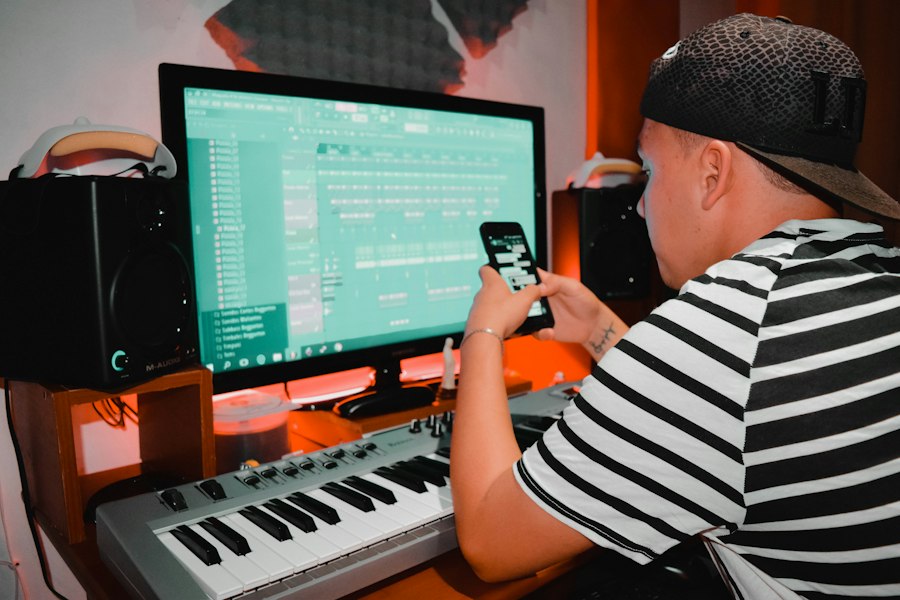
It’s crucial to remember that while these AI tools are powerful, they are tools. They don’t replace the unique human elements of creativity, emotion, and storytelling that make music truly impactful. AI can generate a melody, but it can’t feel the angst of a breakup or the joy of a new love. The most compelling music still comes from human experience and intention.
Augmentation, Not Replacement
Think of AI as a co-pilot, not the pilot. It can handle many of the technical or even ideation aspects, freeing you up to focus on the overarching artistic vision. An AI might generate a beautiful chord progression, but it’s your decision to use it, modify it, or combine it with a completely different idea. The human artist remains the curator, the editor, and the ultimate arbiter of taste and emotion. This partnership allows artists to explore new territories and push their creative boundaries without getting bogged down in repetitive or technically challenging tasks.
The Future of Collaboration
The future of music creation will likely involve even deeper collaboration between humans and AI. Imagine an AI that understands your unique musical style and can generate ideas that genuinely resonate with your artistic voice, almost like an extension of your own mind. This isn’t about AI taking over, but about evolving the creative process itself, making it more efficient, more expansive, and more accessible to a wider range of talent. These tools are democratizing music creation in ways we’ve never seen before, empowering more people to bring their musical ideas to life.
FAQs
What is artificial intelligence music creation?
Artificial intelligence music creation refers to the use of algorithms and machine learning techniques to compose, produce, or enhance music. AI systems analyze existing music data to learn patterns, styles, and structures, enabling them to generate original compositions or assist musicians in their creative processes.
How does AI generate music?
AI generates music by utilizing various techniques such as neural networks, deep learning, and rule-based systems. These systems can analyze large datasets of music to identify patterns and styles, which they then use to create new compositions. Some AI tools allow users to input parameters or styles, guiding the AI in its music generation process.
What are some popular AI music creation tools?
Some popular AI music creation tools include OpenAI’s MuseNet, Google’s Magenta, AIVA (Artificial Intelligence Virtual Artist), and Amper Music. These platforms offer various features, such as composing original pieces, generating accompaniment, or providing music production assistance.
Can AI-generated music be commercially used?
Yes, AI-generated music can be commercially used, but the legal implications can vary depending on the platform and the specific terms of use. Some AI music tools grant users full rights to the music they create, while others may have restrictions. It’s essential for users to review the licensing agreements of the AI tools they use.
What are the benefits of using AI in music creation?
The benefits of using AI in music creation include increased efficiency, the ability to explore new musical styles, and the potential for collaboration between human musicians and AI. AI can help streamline the composition process, inspire creativity, and provide musicians with new tools to enhance their work.
About the Author